Here is a behind-the-scenes look at how our expert team meticulously rebuilt this roof from the deck up.
Step 1: Understanding the Foundation
A high-quality roof is more than just the top white layer; it is a carefully engineered system. Before rolling out the new membrane, we had to ensure the underlying structure was perfectly prepped and insulated.
Step 2: Safety First
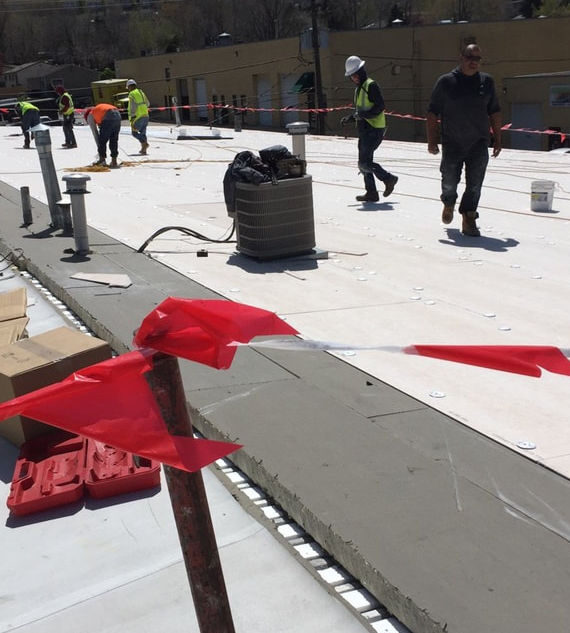
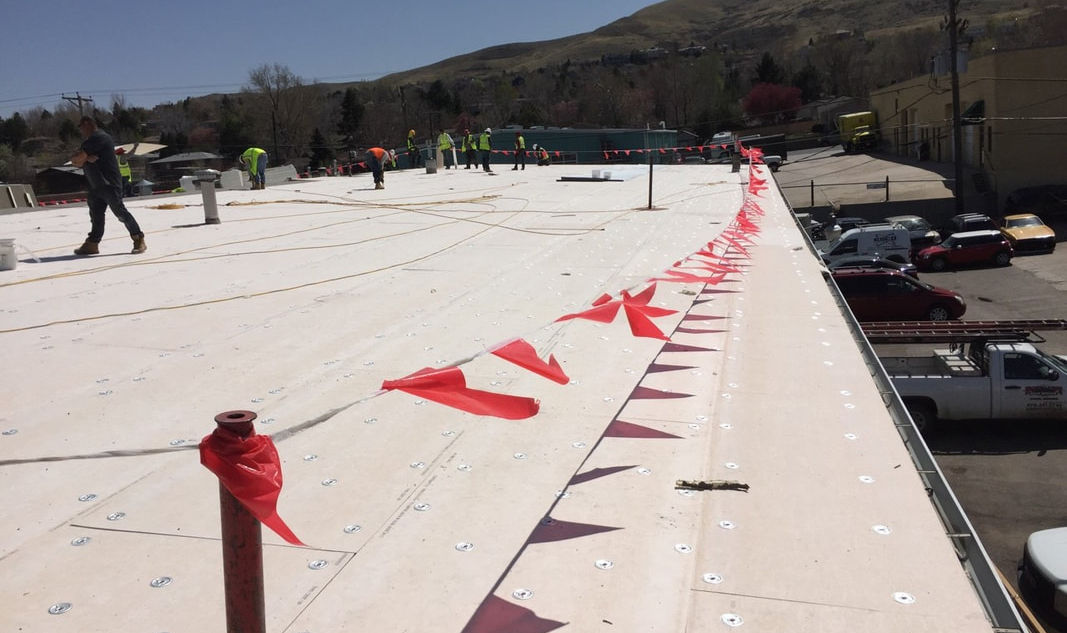
At B&L Roofing, safety is our top priority. Before any heavy lifting or installation begins, our crews establish strict safety perimeters. Working at heights requires constant vigilance, especially when moving large materials across a sprawling commercial rooftop.
Step 3: Securing the Substrate
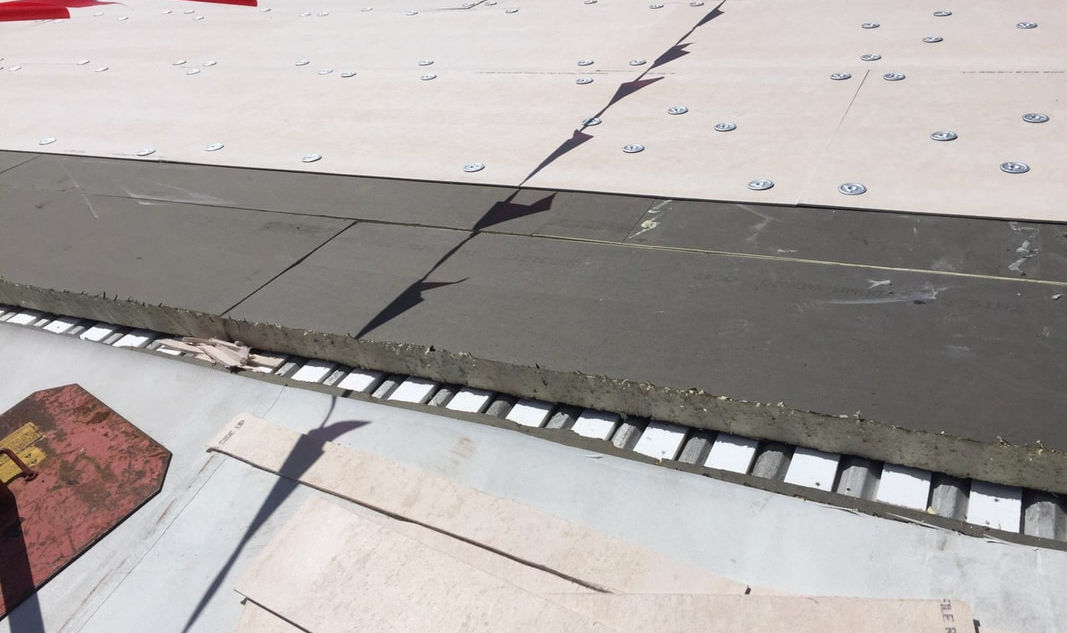
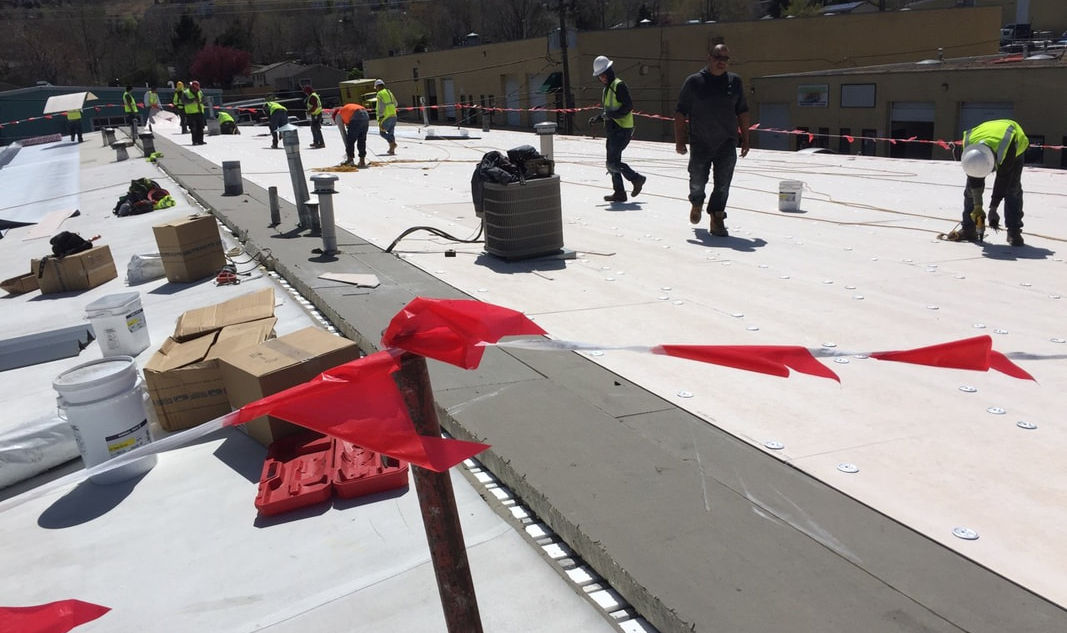
With safety measures in place, the crew got to work laying down the rigid insulation and cover boards. This layer is crucial—it provides the R-value needed to keep the building energy-efficient during harsh Colorado winters, while also giving the TPO membrane a smooth, rigid, and impact-resistant surface to rest on.
Step 4: Rolling Out the TPO Membrane
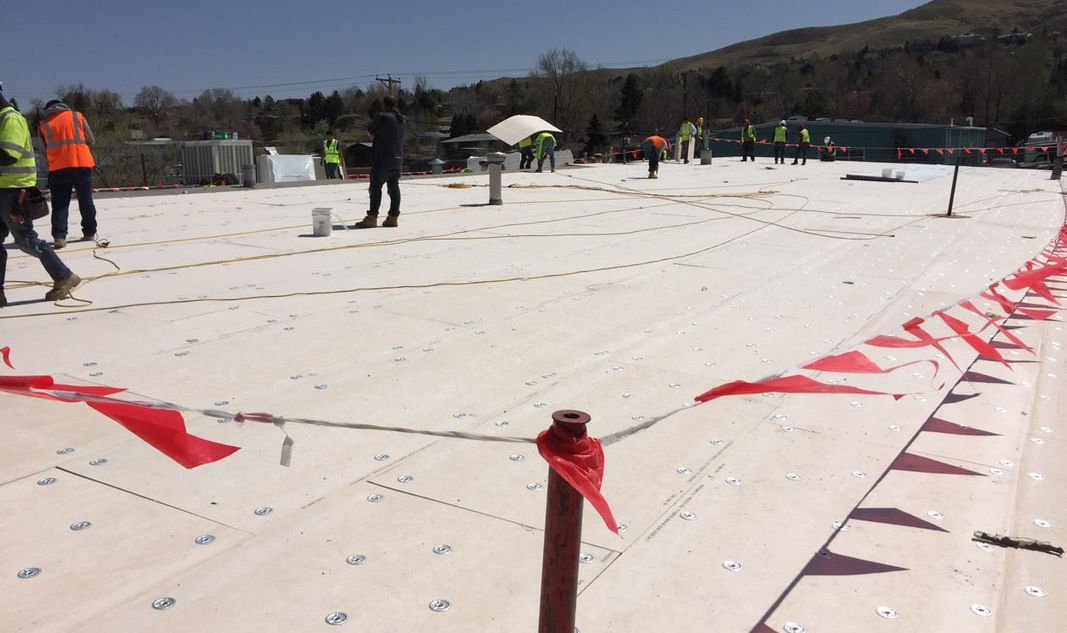
Once the substrate is fully locked down, the star of the show makes its appearance. The crew begins rolling out the bright white TPO membrane. The highly reflective surface of TPO is excellent for reducing a building’s cooling costs by reflecting the sun’s UV rays away from the structure.
Step 5: Precision Fastening at the Perimeters
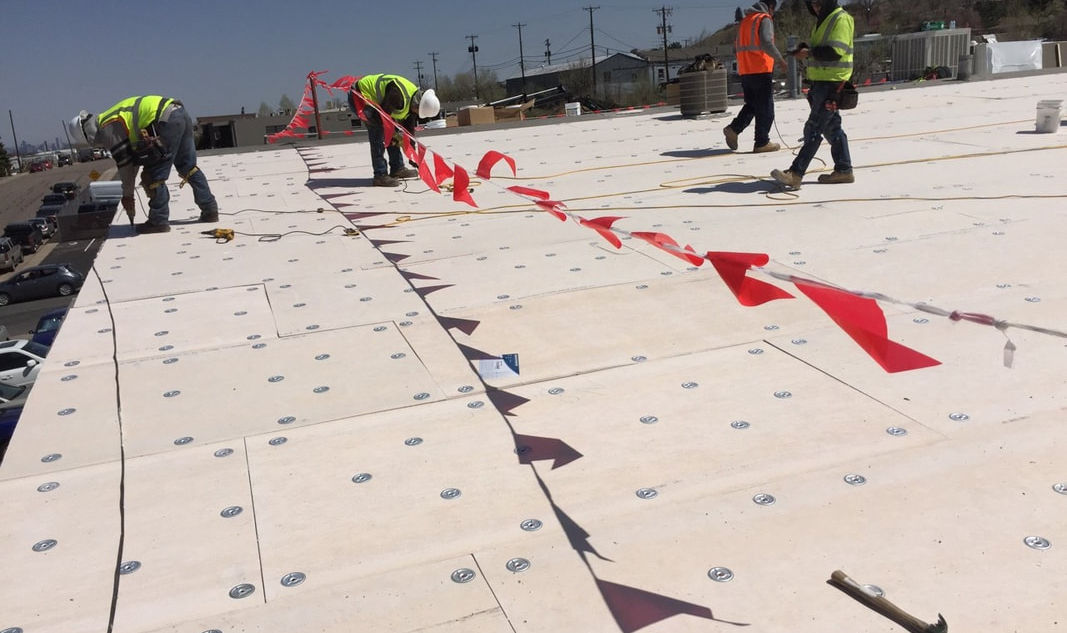
A roof is only as strong as its weakest point, which is usually the edges. The perimeters of a commercial roof endure the highest wind uplift forces. To ensure this roof stays put during severe Colorado windstorms, our team pays special attention to the detailing and fastening along the edges.
Another Job Well Done By the time the final seam was heat-welded, the property on West 5th Ave was protected by a state-of-the-art, energy-efficient roofing system designed to last for decades.
If your commercial property is showing its age or you are dealing with persistent leaks, trust the local experts who understand Colorado weather. Contact B&L Roofing today for an inspection, and let us build a roof that protects your business from the top down!
Related Project
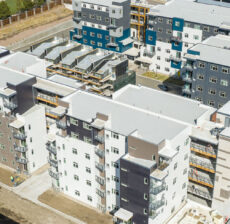
Here is the step-by-step story of how the B&L Roofing team turned a complex…
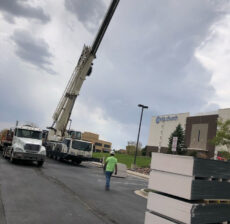
B&L Roofing stepped onto the scene to execute a comprehensive, multi-tiered roof replacement. Below…
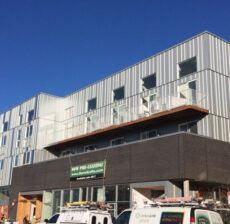
This project required a dual-threat approach: installing a highly efficient, weather-resistant flat roofing system,…
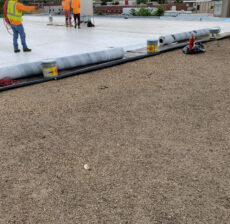
When Ultimate Heating in Colorado needed a complete roof overhaul for their commercial facility,…
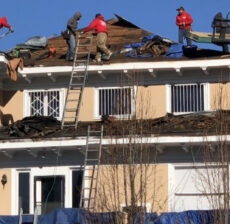
Phase 1: Mobilization and Safe Teardown The sheer scale of The Joshua School required…
Here is the step-by-step story of how the project came together. Phase 1: Site…